
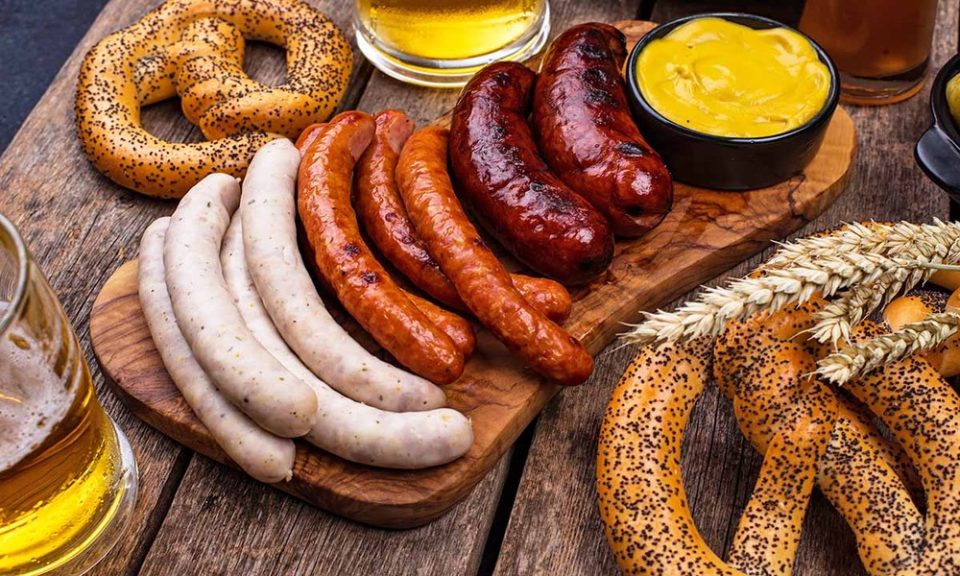
Breakfast in a German household and dinner at the same table share almost nothing on the plate. Different food, different pace, different sausage entirely. Visitors who notice this start asking questions. Locals never thought to ask because the pattern was always there.
Meal routines in Germany shaped sausage selection the way any repeated habit shapes preference quietly, over years, without anyone sitting down to formalise the logic. german wurst selections shift across the day, not because a rule exists somewhere demanding it, but because enough households ate the same way long enough that the pattern stopped needing justification.
1. Morning plate choices
Breakfast in Germany is a cold meal built around bread. Sliced sausage sits alongside cheese, butter, and whatever the household keeps regularly stocked. The varieties appearing at this hour run mild and easy leberwurst spread directly onto bread like a paste, mild gekochte wurst sliced thin, teewurst soft enough to need no knife pressure at all.
Nobody grills anything at breakfast. The whole point is speed and ease. Sausage at this hour functions as protein and flavour without requiring preparation beyond opening a package and reaching for a knife. Regional preferences shape which varieties appear most often, but the principle stays constant across most German households regardless of geography.
2. Midday selections
Lunch historically carried more weight in the German daily routine than dinner. Hot food appeared at midday, which meant cooked sausage rather than cold cuts. Warm bockwurst served with bread and mustard. An authentic Thuringian rostbratwurst eaten standing up at a market stall.
The midday selection runs broader than breakfast. A greater variety of foods is cooked, and regional characteristics are more visible. Midday tables in Bavaria might look different from Franconian ones, not because of the occasion, but because local habits have shaped the sausages that end up on midday plates through decades of repetition.
3. Evening cold plate
Abendbrot, literally evening bread, is where German sausage culture shows perhaps its most distinctive face to outsiders. Cold food again, mirroring breakfast in format but typically slower, more relaxed, shared around a table rather than grabbed before a morning schedule takes over.
Sliced cold sausage varieties come out alongside pickles, mustard, dark bread, and cheese. Salami-style varieties that would feel out of place at breakfast appear comfortably here. Smoked options hold up well at room temperature, their flavour staying intact without any reheating. The evening cold plate is less about specific variety and more about a range of several options across the board, each person building their own combination without anyone directing the assembly.
4. Weekend and gathering meals
Weekend eating breaks the weekday rhythm entirely. More time, more people, more fire. Grilled varieties dominate at outdoor gatherings in a way the weekday schedule never accommodates. Bratwurst, Nürnberger in clusters, smoked varieties warmed slowly rather than cooked from raw, the selection expands because the occasion allows it.
Social eating on weekends produces a different relationship with sausage entirely. Weekday meals treat it as sustenance fitted into a schedule. Weekend meals treat it as the occasion itself, the thing around which everything else gets arranged.
Casual meal routines across Germany never formally assigned certain sausages to certain hours. The assignments happened quietly through years of eating the same things at the same times until the pattern needed no explanation.
